


AAAE/ACC Airport Planning, Design, & Construction Symposium
Sponsor Blog
Integrating CSPPs into Airport SMS: Bridging Construction and Operational Safety
By Joe Hennessy
Director, Aviation Safety Management Services
Crawford, Murphy & Tilly
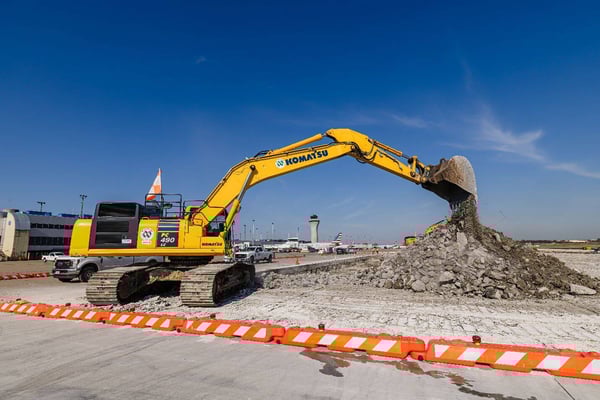
Construction Safety and Phasing Plans (CSPPs) have long served as a regulatory cornerstone for maintaining safe airport operations during airfield construction. They help ensure aircraft movement areas remain protected, access routes are controlled, and coordination with the FAA is maintained while projects are underway.
With the FAA’s Safety Management System (SMS) rule now applying to Part 139 airports, there is an opportunity to elevate how construction safety is approached. Rather than treating CSPPs as stand-alone compliance documents, airports can integrate them into their SMS as active risk controls—shifting from static documentation to dynamic, data-informed risk management.
Within an SMS framework, the CSPP represents one mitigation within a broader Safety Risk Management (SRM) process. Every capital project introduces two categories of risk: temporary hazards created during construction and permanent hazards associated with the completed project. A mature SMS allows airports to evaluate and manage both. Proactive safety activities during planning and design—such as Safety Risk Assessments, Comparative Safety Assessments, and facilitated Safety Risk Management Panels —identify hazards early, while the CSPP manages the temporary risks associated with implementing change.
Taking a lifecycle view is key. When safety is engaged early in long-term planning, airports can evaluate how a proposed project will alter the airport’s overall risk profile and identify opportunities to incorporate safety controls directly into the design. As projects advance into detailed design, cross-functional stakeholder involvement helps identify both construction-phase hazards and final-state operational risks, ensuring mitigations are aligned with real-world operations.
During construction, the CSPP becomes the primary tool for managing active hazards, supported by measurable safety performance indicators and clear escalation triggers. Contractors and on-site service providers play a critical role during this phase, and aligning their safety practices with airport SMS expectations helps ensure hazards, near-misses, and observations are captured and addressed in real time.
Following project completion, SMS processes continue to add value. Post-project reviews validate that the final condition matches design assumptions and identify any new or residual risks. Safety Assurance activities—such as inspections, audits, and trend analysis—confirm whether mitigations are working as intended and help carry lessons learned forward to future projects.
Integrating CSPPs into SMS also breaks down silos that often exist between planning, engineering, operations, and construction management. A shared, risk-based approach improves communication, strengthens stakeholder buy-in, and reduces the likelihood of costly reactive fixes after construction is complete.
Ultimately, integrating CSPPs into airport SMS is not about creating more paperwork. It is about intentional risk management. When CSPPs function as living mitigations within SMS, safety continuity extends from planning and design through construction—and into daily operations long after the project is complete.
