


Q&A With the Airport Director: Michael McMurray
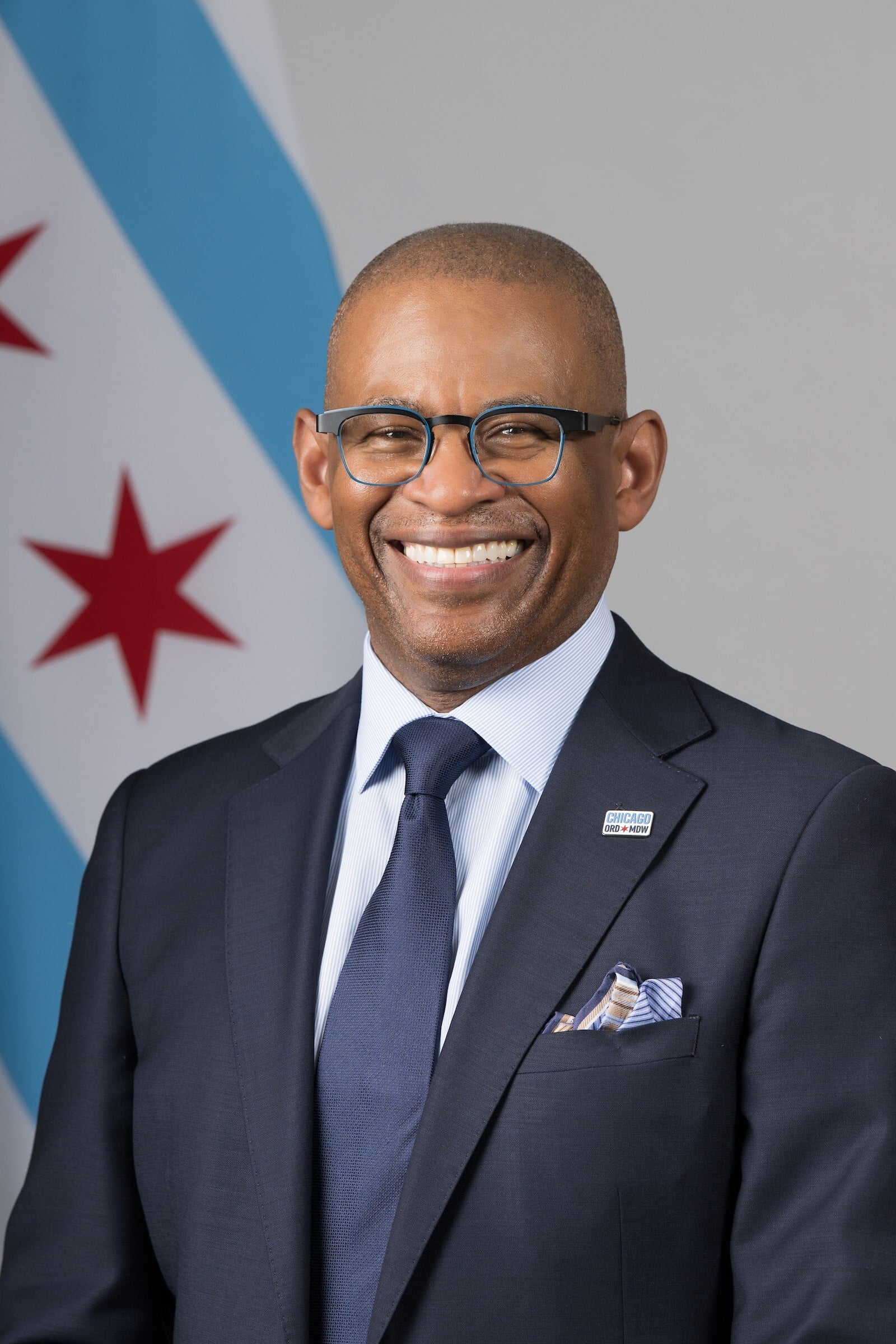
Michael McMurray serves as commissioner of the Chicago Department of Aviation, one of the world's largest aviation systems, serving more than 100 million passengers per year.
CDA is in the midst of multibillion-dollar capital improvement projects, including a $1.3 billion New Concourse D at O’Hare and ORDNext. Why is this needed and what will be the end result?
O’Hare helped usher in the age of commercial aviation in the U.S., but portions of the airport’s terminal infrastructure were built for a different era of air travel. As passenger volumes grow, aircraft and airline operations evolve, and demand for international service increases, these investments are essential to ensure O’Hare can continue to compete as one of the world’s leading aviation hubs.
ORDNext represents the next generation of service at O’Hare. The program will modernize the airport’s facilities, expand gate capacity, strengthen domestic and international connectivity and create a more efficient and welcoming experience for passengers.
The New Concourse D — the first new concourse at O’Hare in more than 30 years — will accommodate both narrowbody and widebody aircraft, supporting a broader range of domestic and international flights. New Concourse E will add capacity for narrowbody aircraft and improve connections across the domestic network. A new Global Terminal will nearly double the capacity of the current Terminal 2 and bring domestic and international operations closer together, making connections easier and more convenient for travelers.
For passengers, the result will be shorter and more seamless connections, improved amenities, modern facilities and a more intuitive journey through the airport. For airlines, the program will provide greater operational flexibility and the infrastructure needed to expand service to destinations Around the world. For Chicago and the region, it will allow O’Hare to continue growing as an economic engine, supporting jobs, tourism, trade and long-term competitiveness.
Our airline partners are helping finance this historic investment and have been tremendous collaborators. We are fortunate to work with partners who share the Chicago Department of Aviation’s commitment to improving connectivity, elevating the passenger experience and positioning O’Hare for continued growth for generations to come.
How do you manage competing priorities between O’Hare and Midway?
Each airport has different opportunities and challenges, but I wouldn’t label them as “competing priorities.” It’s an honor to have two international airports in our city, directly connected to the Chicago Transit Authority, that are different in scope yet can serve all of our city’s 77 communities for varied travel needs.
The CDA would not be as great as it is without having both airports serving our city. Both continue to experience growth and development with routes, concessions and newly added carriers. In some ways, it’s like having children, who, while different, you equally appreciate and value. In short — we never pursue growth and development at O’Hare and Midway at the expense of the other.
How do you work with the mayor and city council?
In this position, you will not be able to effectively do your job without frequent communication with stakeholders for organizational goals. I communicate regularly with Mayor Brandon Johnson and his team so they understand the pressing needs of our airports, and I particularly value my relationship with members of the City Council Aviation Committee, including Chairman Matt O’Shea and Vice Chairman Derrick Curtis.
Even when committee members have differing views on the goals of our city’s aviation system, we welcome thoughtful discussion because it often leads to stronger, more effective solutions than any of us might develop independently.
How do you attract and retain both new airlines and have existing airlines increase their service levels?
We’re fortunate that Chicago is one of the world’s hubs for commerce and culture, and it is a city that is attractive to businesses and visitors on multiple levels. Our airports have always been at the vanguard of worldwide aviation, and more than 50 airlines serve O’Hare and Midway. That would not be possible if those carriers didn’t think that our airports and city could support their operations in a timely, efficient manner. Taken altogether, it makes for a great environment in attracting new airlines — as we’ve done over the last year with new entrants like Avianca, Arajet, EgyptAir and Philippine Airlines.
Midway celebrates its 100th anniversary in 2027. Can you talk a bit about that airfield, its tight footprint, surrounded by residential properties, and how you manage growth there?
Midway is an extraordinary part of Chicago’s aviation history. As we approach its 100th anniversary in 2027, we are celebrating an airport that has long been known as the “busiest square mile in aviation.”
Unlike many airports, Midway cannot simply expand outward. It is surrounded by beautiful, established residential neighborhoods, so our approach to growth must be thoughtful, efficient and respectful of the community. Growth at Midway is less about adding physical space and more about making better use of the space we already have.
That means modernizing terminals and passenger amenities, improving baggage and security operations, using technology to move travelers more efficiently and working closely with our airline and federal partners to maintain safe, reliable operations. It also means continuing to invest in sustainability, noise-management efforts and strong communication with the residents who live around the airport.
Midway’s success has always been closely connected to the surrounding community. As we enter its second century, our goal is to preserve what makes the airport so valuable — its convenience, accessibility and economic impact — while ensuring that future growth is responsible, balanced and compatible with the neighborhoods that have been its neighbors for generations.
How do you inspire the next generation of airfield workers?
One of my favorite parts of the job is meeting the people who keep our airports running. Airfield workers truly are the MVPs of aviation, and their knowledge and experience are indispensable. We’re inspiring the next generation by bringing aviation directly into Chicago’s neighborhoods through our community outreach vehicle, Papa Blu, connecting students with internships and hands-on experiences, and building pathways to airport careers through our partnerships with Chicago Public Schools, City Colleges and the Aviation Career Pathways Program at Olive-Harvey College.
How do you motivate your staff?
Every day I get to see the hard work that our staff puts into their jobs. They deserve recognition and reminders that they are valued team members. Encouraging them to move forward with the ideas and projects they have proposed and been approved, supporting them whenever obstacles inevitably come and letting them know that they have the power to achieve their dreams.
What advice do you have for those starting out in the airport operations and management field?
Right now, aviation is one of the most exciting industries to pursue fulfilling careers in. And because the industry is preparing for a wave of retiring workers, new aviation employees are in demand. For those starting out, find what part of airport operations and management really interests you, have a clear vision of what kind of roles you would like to have long-term and map out a strategy for how you will get there. Even if your professional trajectory sometimes doesn’t follow a straight line, with belief in yourself and determination, you can get there.
What is one fun thing someone wouldn’t know about you?
My staff probably knows this, but my favorite movie of all time is The Godfather. Even though I’m nothing ike him, I think one of the most compelling characters ever written is Don Corleone.
If you weren’t working at the airport what is your dream job?
Hard to say, but it would still be in aviation. I love this industry. FAA administrator? Or if I had 20/20 vision, maybe a pilot!
Where is your dream travel destination? And why?
I’d love to take an extended cruise through the Mediterranean, exploring Greece, Italy, Spain and the islands surrounding each country. It’s an extraordinarily beautiful part of the world, rich with history, incredible food, vibrant cultures and breathtaking scenery.