


Why Columbia Metropolitan Airport Entered the Ground Handling Business
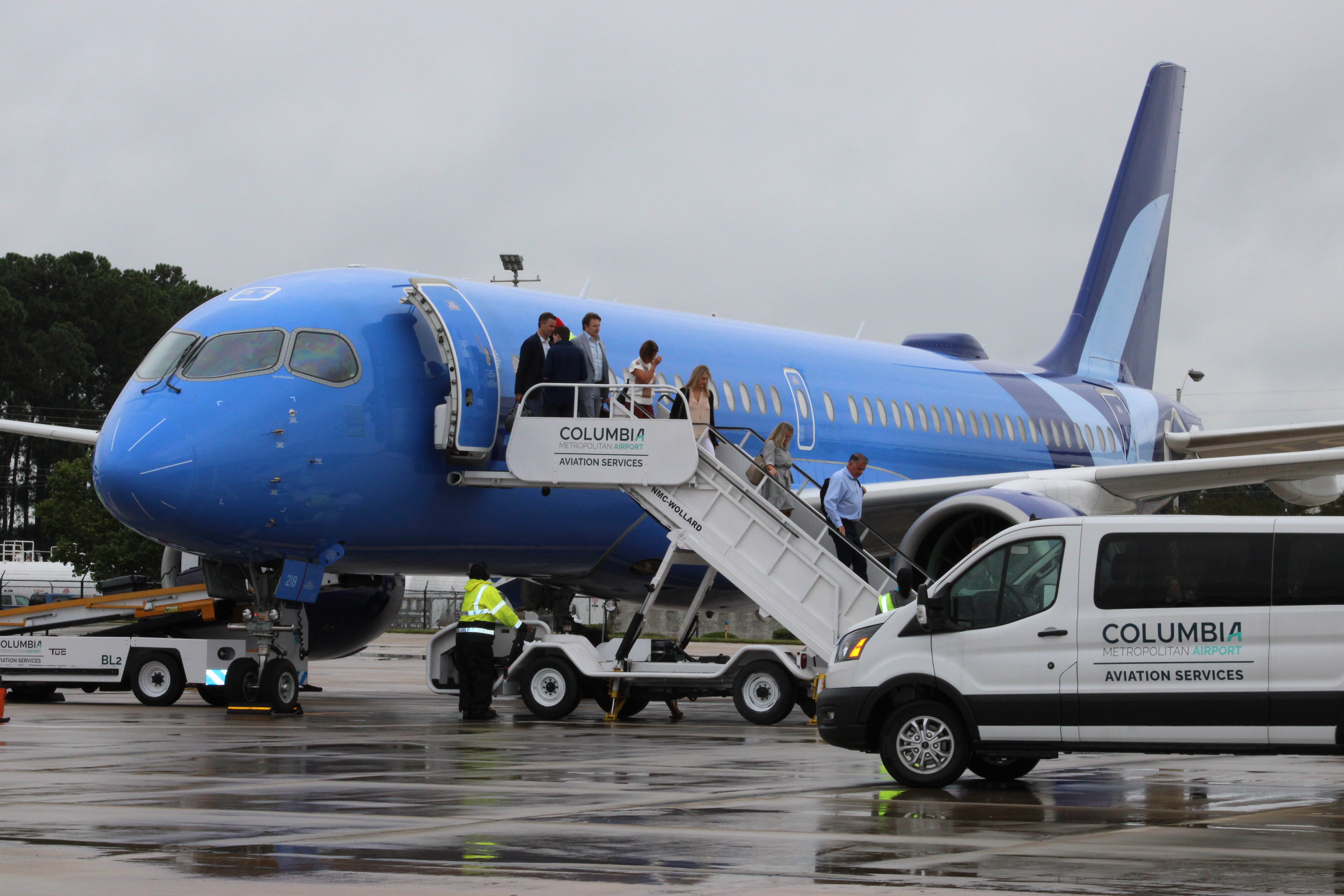
In 2024 Columbia Metropolitan Airport (CAE) began an ambitious and somewhat unique plan to generate additional revenue while simultaneously increasing total cargo tonnage coming through the airport. The plan was to get into the ground handling business.
Several important factors contributed to, and supported, that decision: The results of an air cargo specific market analysis as part of the airport’s 2025 Master Plan, economic development grant funding from the South Carolina Department of Commerce and the announcement of the Scout Motors production facility located a short drive away from the airport.
There was one additional factor that contributed to the creation of what is now CAE’s Aviation Services Department — a history of missed opportunities. Over the past several years, the airport missed out on handling multiple high-profile passenger and cargo-only charter operations. We missed those opportunities not because there was a lack of desire, capacity, or pavement to accommodate them but rather, there was a lack of suitable capabilities to handle them efficiently or, in some instances, handle them at all.
Those missed opportunities led to a change in our operational mindset. Now that we, with support from key stakeholders, have the required capabilities, we no longer have to decline opportunities that give us the ability to tell our story as a viable destination for international cargo and passenger operations as well as an economic engine for the Midlands region of South Carolina.
Since we have developed these capabilities and the necessary stakeholder engagement, we have been successful with several high-profile charter operations. One such opportunity was supporting the Rivals in Red Tour which brought English Premier League clubs Manchester United F.C. and Liverpool F.C. to play a match in the University of South Carolina’s Williams-Brice Stadium.
That event alone generated an estimated direct economic impact of $13 million and brought 70,000 visitors to Columbia from across the globe, some of whom traveled through CAE providing an added benefit to our enplanement statistics.
A second high-profile opportunity is hosting the Fluminense F.C. from Rio de Janeiro, Brazil. The club had selected Columbia as their base camp as they competed in the FIFA World Cup. This was the first large wide-body operation for which we used all of our own Aviation Services equipment to handle both the passengers and their containerized cargo. Our strong relationship with our local CBP Port also came in to play in the
operations success. We were able to work together and create a temporary Federal Inspection Station in our Public Safety Department building to successfully and efficiently clear each passenger and their cargo.
Our handful of high-profile charter flight operations really opened the door and allowed our Aviation Services
Department to start building a reputation within the airline and charter industry. Our focus on safe, efficient and cost effective operations with a very high emphasis on customer service, played an important role in getting an unexpected but encouraging opportunity to bid and ultimately win the above and below wing ground handling service contract for Spirit Airlines following its announcement of new scheduled service into CAE in early 2025.
The Spirit Airlines contract award was a positive step forward and one that our Aviation Services team and I quickly realized would require significant work and dedication — while also providing a great learning experience.
One of the major lessons learned during our time with Spirit is how important staffing decisions are and that a highly passionate and enthusiastic team leads to high morale within the group. This in turn ultimately leads to exceptional performance. In growing our team, our highest priorities were desire, interest and how we felt the applicants, which were well over 100, would fit in with the group and work well with each other.
One additional selling point we were offering prospective staff was a higher pay rate than any other similar positions at the airport. We were able to pay the highest rates and still offer a competitive per-turn rate to Spirit because our department’s overhead was still relatively low. Our low overhead was a direct result of the grant funding we received from the South Carolina Department of Commerce. We used a sizable portion of that funding to procure our ground service equipment for both passenger and cargo operations.
Following Spirit Airlines’ unfortunate departure from CAE, we refocused our efforts on two key areas of development, each with a promising outlook for success. The first was attracting additional low-cost carrier service to CAE, and the second was further developing our air cargo handling capabilities ahead of the completion of the Scout Motors production facility and the associated multi-million-dollar supplier parks coming online in late 2026.
The creation of our Aviation Services Department has had an unexpected and positive impact on our ongoing air service development efforts to attract new low-cost and ultra-low cost carriers. The ability to offer both above- and below-wing services to prospective new air carriers has become a unique and valuable incentive, helping to expedite and de-risk the startup process. This capability provides CAE with a distinct advantage in air service development and the recruitment of new service.
The outlook for air cargo development at CAE looks equally as promising as our potential for additional passenger air service. In creating our Aviation Services Department, we’ve filled a niche for future demand, as there have been no traditional bulk air freight operators at CAE.
We will soon begin a multi-million-dollar renovation of an existing building with direct ramp access that will become our new base of operations for future air cargo movements. Alongside that project, our Aviation Services staff is completing additional air cargo-related training, and once both tasks are complete, CAE will be able to handle and support nearly every type of freight on virtually any cargo aircraft currently in operation worldwide.
Our success not only supports CAE, but also positively impacts growth in our community by supporting and enhancing the supply chain along with increased economic growth and development. Our focus remains, as it always has, on providing exceptional customer service and efficient operations at a competitive rate, delivered by a passionate, enthusiastic and well-trained Aviation Services Department staff.
About Ryan Kreulen, A.A.E.:
Kreulen, A.A.E., is vice president of operations at Columbia Metropolitan Airport.