


The Power of an Airport’s Social Media Team
Social media is a lot like an all-you-can-eat buffet. Served to you on a mobile device, tablet, or desktop, the endless assortment of consumables is enough to fill any sized appetite.
But what if the buffet were only serving steamed vegetables? Or an exclusive menu of sugar-coated desserts? A well-balanced plate of social content is key to keeping your audience full, and thankfully that is exactly the type of meal being served across many airports’ social media channels.
Modern airport marketing depends on social media to build strong brand awareness and craft the voice of the organization. It is up to the savvy social media teams to keep the messaging informative and fun. Along with informational content regarding airport development, new routes and airfield notices, audiences are fed short-form videos of CEOs speaking in Gen Z slang, rudimentarily photoshopped memes, or trending music tracks backdropping views of airport lobbies, aircraft and amenities.
Videos are now favored over still photographs, while visually captivating informational graphics outshine a box of text.
There are 5.3 billion social media users around the world, equating to nearly two-thirds of the total global population. Users spend an average of 19 hours a week on social media platforms, but offer up an infinitesimal two-second attention span to the videos and photos waterfalling their screens. Being able to capture someone’s attention in that blip of time is key for airports looking to attract new and frequent travelers.
The ever-changing landscape of social media has seen a progressive evolution of desired content. Videos are now favored over still photographs, while visually captivating informational graphics outshine a box of text. So how does that play into the need to inform airport travelers of some common, not-so-bright-and-shiny topics like parking garage closures or weather delays? Queue the fun content.
Florida boasts two of the most notable airport social media accounts at Orlando International and Tampa International (TPA). Both airports’ social channels offer up an assortment of delicacies, such as Millennial memes and Gen Z trends drawing attention and engagement from all ends of the earth. When it comes time to announce events or important airport updates, they already have loyalty from an attentive audience, which helps their messaging reach and stick.
Through playful banter on X (formally Twitter), TPA and Washington Dulles International grabbed the attention of sports fans during last season’s NFL playoffs. A simple tweet sparked a tongue-in-cheek discourse between the two airports, attracting local and national news outlets, including ESPN. Other airports joined the conversation with quippy replies and reaction gifs. This example of an organic social media interaction shows how attention can be reached beyond the scope of the air traveler and aviation industry, as well as providing an uptick in user engagement and followers.
...Offer audiences a peek behind the curtain; showing airport areas, processes and job duties that are not commonly seen or known by travelers can produce effective results.
Utilizing an airport mascot for social media content is also a popular tactic. TPA has a 21-foot-tall flamingo statue “Phoebe” who is often used for content and personified as the social media account manager. San José Mineta International’s (SJC) coveted “Ernie,” the airport’s baby chick mascot, makes regular appearances on its channels in both animated and plushie-form. Informational messaging is broadcast through this cute critter, grabbing efficacious attention from followers. While it may seem that larger airports gain the most attention on social media, smaller airports should not be left out of the conversation. The social teams at Alabama’s Huntsville International, Appleton International in Wisconsin and Arizona’s Mesa Gateway Airport, among others, also serve up an assortment of content for their audiences. Appleton posted a video of a cow, aptly named “Captain Milkshake,”, weight-lifting luggage and practicing its pitches to incentivize a route to Phoenix. This let travelers know baseball spring training was in “full swing” in Arizona. Huntsville and Mesa are quick on the trends, creating amusing memes and popular video snippets on a weekly basis. Airports small and large can make a splash on social media if they know how to keep it fresh and fun.
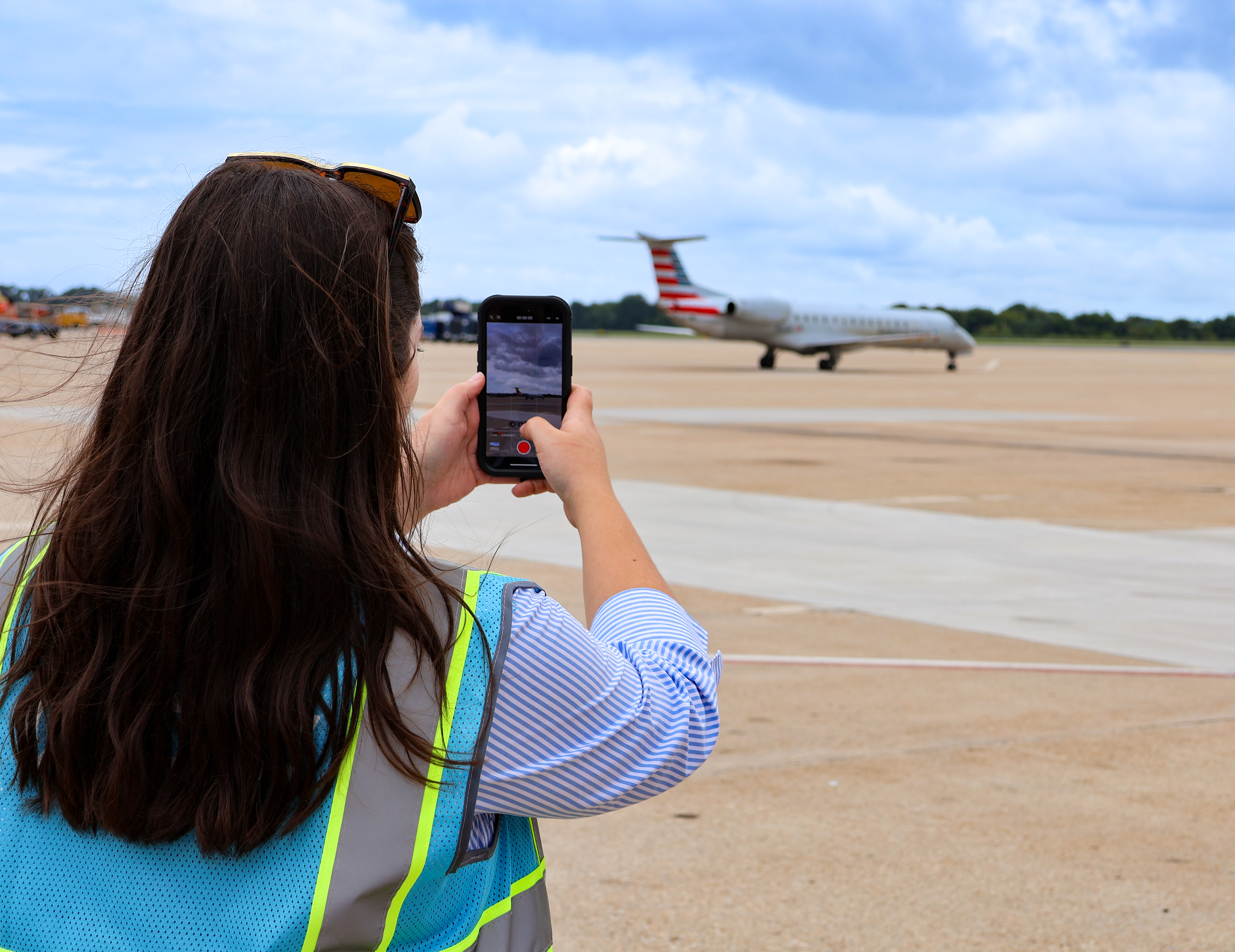
An additional approach to airport social media content is to offer audiences a peek behind the curtain. Showing airport areas, processes and job duties that are not commonly seen or known by travelers can produce effective results. Virginia’s Norfolk International (ORF) has created a handful of video vignettes highlighting different departments at the airport. On its social channels, one can find friendly airport employees explaining the daily tasks of their departments. They’ll also learn how the runways are painted, or how tons of Chesapeake Bay oysters are typically in the belly of commercial flights leaving the airport. Reeling in an audience with such stories not only achieves follower commitment but leaves the viewer educated, as well. It is now a common practice for television news outlets to turn to social media for stories. This makes the messaging and media being delivered by airports even more powerful for gaining media coverage, just as a press release once was. Media monitoring suites are an invaluable tool for collecting earned media value as there is a monetary figure attached to every second of televised airtime.
In February 2025, ORF experienced the second-largest snowfall recorded in the history of its region. Coverage of this weather event was extensively shared on all ORF social media channels given its impact on air travel. News stations gobbled up photos and videos posted by the airport and an additional news story was filmed on location in a snowplow, highlighting the hardworking field maintenance team.
This snowstorm coverage was picked up by NBC’s Today show and earned ORF tens of thousands of dollars in earned media value. And while that might be a unique instance of media coverage, a simple social media post announcing its No. 4 ranking on Skytrax’s “World’s Best Domestic Airports 2025” brought in $27,000 in earned media value. These figures confirm the need for, and value of, an airport’s social media presence.
Whether the approach is trendy, informational, or a mix of both, airports must trust the recipe of their social media teams. The ultimate goal is to stop the scroll — so if you see someone from your social media team walking towards you with their phone asking, “Hey, can I film you doing [something a tiny bit ridiculous]?”…please, just trust us.
About Erin Murdock:
Murdock is airport art and social media coordinator at Norfolk International.