


The Spaces Between Hello and Goodbye: Building Lasting Relationships with Tenants at Chandler Municipal
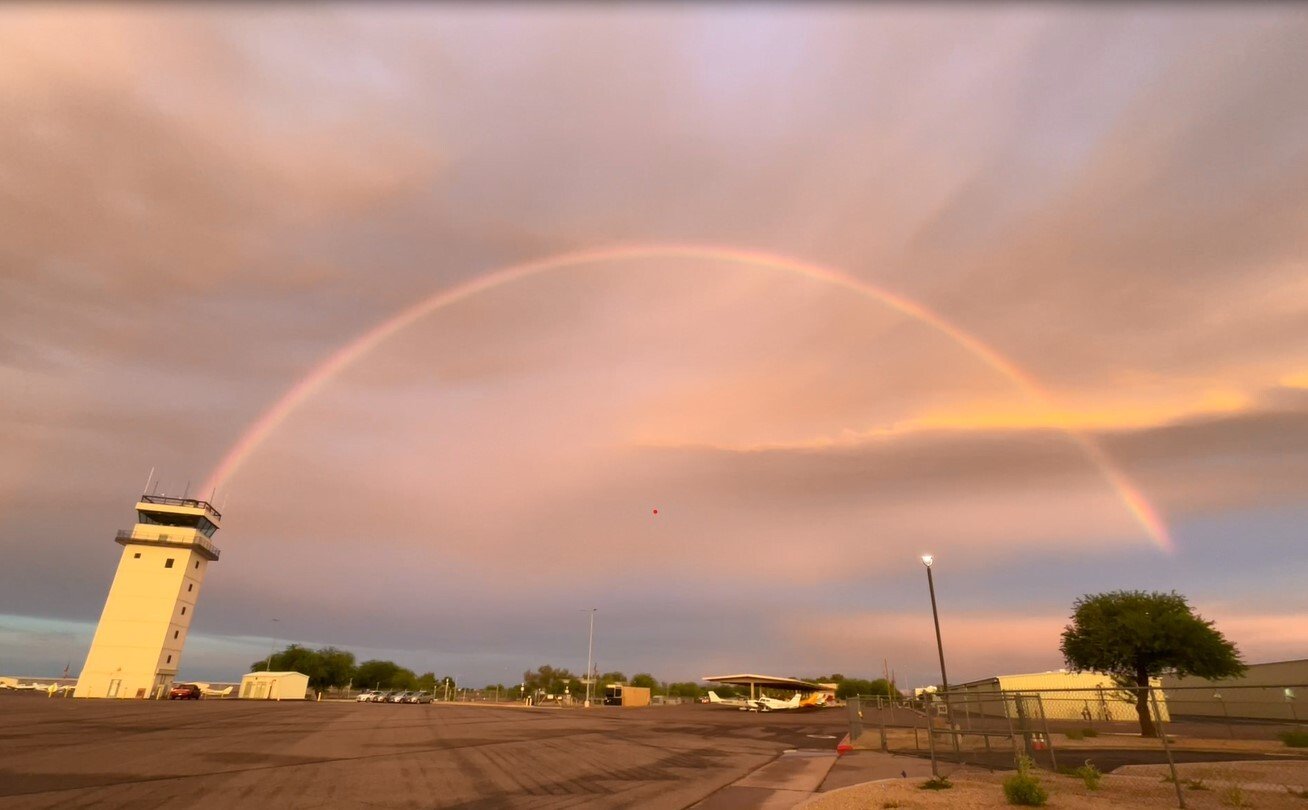
I have the privilege to work at one of the country’s busiest general aviation (GA) airports — Chandler Municipal in Arizona. It’s a remarkable place with a nearly century-long story that now has over 450 aircraft calling it home and nearly 2,000 based tenants across the spectrum of what we call general aviation.
We amazingly get to see it all — business jets to ultralights, Cirrus SR22s fresh off the assembly line to octogenarian biplanes that look brand new, and even a handful of warbirds and a gentleman building a GeeBee replica. All are amazing aircraft, but it’s the people attached to them who make an airport like Chandler so amazing. If you ask the tenants about their stories, they are just as varied as the aircraft.
That can, as you might guess, lead to some differences of opinion on occasion, but it’s been my experience in aviation that people have much more in common than they have differences. Airports have always been places where anyone from a day-one aviation enthusiast to a 20,000-hour veteran can share their enjoyment in quite literally anything to do with flight. In fact, that was the proverbial “cardinal rule” of aviation my dad instilled in me at a very early age, “Never forget, aviation is a passion before it’s a profession, and it’s a family before it’s an industry. If you treat it that way, everything else will follow.”
This is the attitude I have carried with me throughout my aviation career, and it’s kept me in good stead. I carried it into my position at Chandler, originally as the airport’s business coordinator. That attitude was immediately challenged when a conversation with a tenant did not go well.
It was a very short exchange. I introduced myself and asked how their day was. The only reply I received was, “Oh. If you work for the airport, we’ve spoken long enough.” The tenant then hung up. The office of said tenant was exactly 400 feet from mine. It took me another six months to travel that distance and have a conversation with him.
In another office, that of a colleague and friend, is a plaque that has the Norm Crabtree quote, “The airport runway is the most important main street in any town.” That colleague once told me, “That’s how we think we present ourselves to not only the public but to the tenants. But we don’t. Just ask them.” So I did. Tenants, as you might surmise, didn’t hold back. I’ll spare you the long, heavily adjectival descriptions, accusations and criticisms levied against the airport in their answers, but I think I can sum it up succinctly. How we often present ourselves as airport administrators is through blunt questions. The tenants don’t hear, “What may I assist you with?” They hear, “What happened now?!?” with the subtext of “that I now have to fix.” No personal interaction, no familial feeling and no passion are included in such exchanges. And here lies the heart of the problem.
Aviation is not transactional. Aviation is primarily a passion and a community before anything else, and you can’t treat people who are passionate about everything in aviation so transactionally.
Marilyn Gardner, a nurse, world traveler and author, gave us what I consider to be one of the best definitions of what an airport is — “Airports are liminal spaces, spaces between hello and goodbye.” If that’s true, then it’s our job as airport employees and, more importantly, as members of our airport family, to ensure we spend the time between the hello and the goodbye wisely. Namely, how do we stretch that liminal space to build relationships?
And that was my charge upon arriving at Chandler — build back the community and simply get people talking again.
After several attempts, which didn’t fare much better than that short phone call, staff and I decided the simplest approach was best. We were going to be aviation geeks before we were administrators.
For example, when the city manager told me to set up a day where he could meet and talk to tenants, I told him just to reserve an entire morning. He gave me the date, I told him to wear comfortable shoes and then I set up nothing. When he arrived and asked who we were meeting with first, I said, "No idea, but I hope you like hanging out in tin hangars and drinking very strong coffee.” We then began walking the airport.
We went into every hangar that was open from the smallest with a Piper J-3 Cub to the epoxy-coated floored giants with five corporate planes. I’d knock on the hangar door, say “Hi,” and invariably “Nice bird,” and told everyone we were simply out to do a little hangar flying. The response was amazing.
The four hours we set aside for that morning stretched beyond six. We drank oceans of coffee and heard flying stories — everything from what happened yesterday in the pattern to what the airport was seventy years ago. And we laughed with everyone. We had managed, if for only one day, to stretch that liminal time and avoided any goodbyes. We heard only, “See you soon!”
The most surprising thing from that day was the common response of “No one from the airport has ever just stopped by to hangar fly.” The city manager’s direction was, “Do this more.” And we have, at least once a week. The result has been easy to see, at least for those of us in the airport offices.
When we ask five pilots to show their aircraft for a community event, 25 show up. When we asked for 10 pilots to help us with an open house for city residents, over 40 engines started that morning and shut down in front of our terminal. They each stayed next to their aircraft for nearly seven hours, sharing their love of aviation with their neighbors. I can happily name a dozen more such events from just the last year.
We now proudly say our flying community comes together to share with one another more often, but we are most proud that they include us. This is the chief privilege we get as airport employees — to be part of an aviation family. And this isn’t simply community relations. It’s relationships that matter most in our industry. When you take the time to truly acquaint yourself with your tenants, a universal airport truth becomes readily apparent. It’s the people who make an airport so amazing. Without the pilots, the mechanics and everyone else, planes are just collections of tin, and runways are just orderly stretches of pavement. It’s the people who make the flying world the magical thing it is.
To be blunt, you get what you give. If you treat tenants transactionally, you get customers. If you get to know them — their stories, their histories — you get so much more.
Chandler isn’t unique. All GA airports have similar problems, struggles and occasionally find themselves at impasses not unlike what I encountered here six years ago. But all GA airports also have amazing aircraft, fascinating histories and stories, all of which are rooted in the people who call an airport their aviation home.
Harry Crosby, a navigator in the 100th Bomb Group in World War II, provided perhaps the best and simplest approach on how we should conduct ourselves when he said, “We can construct an okay life by deciding how far out to look.”
Don’t simply ask what a tenant needs now. Ask what they need now and then ask about them. Aviation is a passion before it’s a profession for all of us. Making the decision to stretch the moments you have with tenants, those times between hello and goodbye, gives you more than “an okay life,” as Mr. Crosby would say. It gets you an invitation into the airport’s family.
So go make the time. Do a little hangar flying. Hear some amazing stories. It will be worth it, and everything else, as my dad would say, will follow.
About Ryan Reeves:
Reeves is airport manager at Chandler Municipal. Born into a general aviation family, he took his first airplane ride at three and is an aircraft owner, following in his father’s and grandfather’s footsteps.